R. Bras. Zootec.11/set/2026;55:e20260048.
Fermentative profile and nutritional composition of tropical grass silages from Brazilian beef farms
Janaina Macieiro Bragatto
 , Ariane de Freitas Silva
, Nailah Grunndemann da Silva
, Giovanna Hamera Zapponi
, Pedro Ricardo Ballavenuto Campanili
, Ferenc Istvan Bánkuti
, Thiago Fernandes Bernardes
, Luiz Gustavo Nussio
, João Luiz Pratti Daniel
, Ariane de Freitas Silva
, Nailah Grunndemann da Silva
, Giovanna Hamera Zapponi
, Pedro Ricardo Ballavenuto Campanili
, Ferenc Istvan Bánkuti
, Thiago Fernandes Bernardes
, Luiz Gustavo Nussio
, João Luiz Pratti Daniel
ABSTRACT
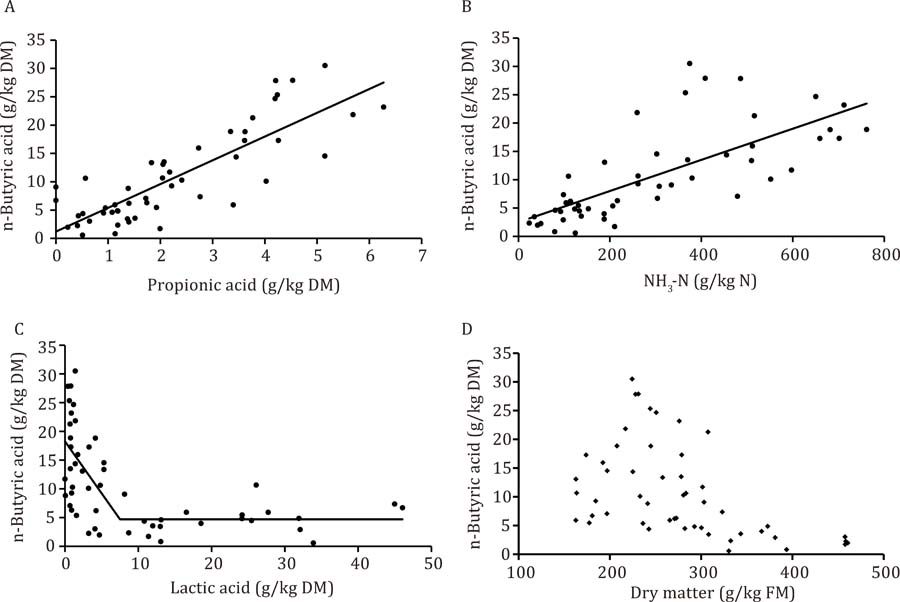
This survey was conducted to assess the fermentation profile and nutritional composition of tropical grass silages on beef farms. Grass silage samples were collected from 51 beef cattle operations located in four Brazilian states (MT, MS, SP, and PR). Additionally, a questionnaire about silage production and utilization was completed. The lack of correlation between the concentration of n-butyric acid and the IVDMD (P = 0.368) indicated that fermentation pattern and nutritional value were independent and therefore required separate grouping analyses. A cluster analysis based on the IVDMD data identified two groups (high and low IVDMD). Of the total, 43% and 57% of the samples were clustered into the high (508 to 709 g/kg DM) and low IVDMD (314 to 499 g/kg DM) groups, respectively. The IVDMD was negatively correlated with the indigestible neutral detergent fiber content (r = −0.875; P<0.001). A second grouping was performed based on an a priori n-butyric acid threshold: ≤ 3 g/kg DM (low) or > 3 g/kg DM (high). Most samples (86%) had n-butyric acid concentration > 3 g/kg DM, and the database revealed that silages with DM > 370 g/kg had a lower risk of clostridial fermentation (risk difference = −0.956). Silage samples with a low concentration of n-butyric acid had less particles retained on the 19-mm sieve. Collectively, the results from this survey indicate that most tropical grass silage produced in beef operations had low digestibility and poor fermentation quality. These findings suggest the need to develop, transfer, and apply techniques that contribute to improving tropical grass silage conservation and quality, particularly when greater forage inclusion in the diet can enhance production efficiency (e.g., for growing cattle and breeding cows).
Palavras-chave: clostridium; digestibility; Megathyrsus; survey; Urochloa