R. Bras. Zootec.30/Jul/2026;55:e20240227.
Mixed factor analysis of the influences of beef cattle production characteristics on carcass traits
Lidiane Fonseca de Oliveira
 , Rodrigo Garófallo Garcia
, Maria Fernanda de Castro Burbarelli
, Leonardo de Oliveira Seno
, Claudia Marie Komiyama
, Fabiana Ribeiro Caldara
, Alexander Alexandre de Almeida
, Elivelton de Salles da Silveira
, Rodrigo Garófallo Garcia
, Maria Fernanda de Castro Burbarelli
, Leonardo de Oliveira Seno
, Claudia Marie Komiyama
, Fabiana Ribeiro Caldara
, Alexander Alexandre de Almeida
, Elivelton de Salles da Silveira
ABSTRACT
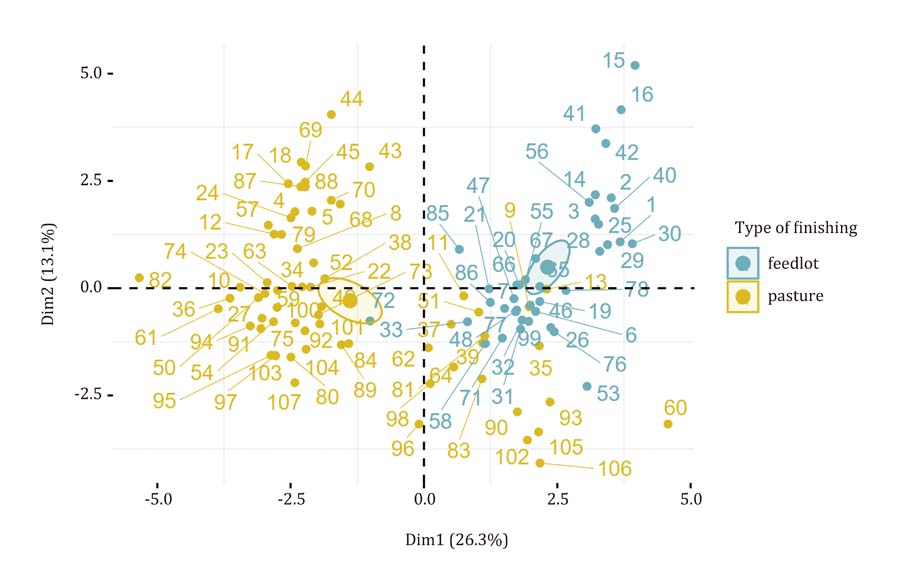
This study aimed to investigate whether the beef cattle production system enhances the commercial value of beef carcasses. We assessed which characteristics of the production system most significantly influence the carcass grade and consequently the value generated, using a database from a commercial property analyzed through mixed factor analysis. The dataset included information on 3,612 cattle slaughtered commercially from a property in Mato Grosso do Sul in 2019. Qualitative explanatory variables considered were breed, sex, type of finishing, slaughterhouse, fat finishing, and dentition. Quantitative variables included live weight, hot carcass weight, carcass yield, value, amount paid, and payment according to carcass grade protocols. The carcass grade protocols in Mato Grosso do Sul, which are based on carcass classification criteria such as precocity, fat finishing, breed, sex, and slaughterhouse, were also examined. The analysis revealed that the absolute and cumulative percentages of variance explained by the factors were 65.27%, indicating that a significant portion of the total variance was explained by the model. The statistical model effectively represented the production system, decision-making regarding finishing methods, and slaughterhouse choices in relation to potential bonuses based on carcass classification, animal characteristics, and herd characteristics. Key productive characteristics influencing carcass remuneration included weight, sex, and type of finishing, all of which were closely linked to the production system employed.