R. Bras. Zootec.30/Jul/2026;55:e20250030.
Comparative analysis of egg enrichment and oxidative stability using selenium, seleno-methionine, and chitosan-encapsulated seleno-methionine
Sina Iravani Kazar
 , Vahid Hakimzadeh
, Esmaeil Ataye Salehi
, Reza Vakili
, Vahid Hakimzadeh
, Esmaeil Ataye Salehi
, Reza Vakili
ABSTRACT
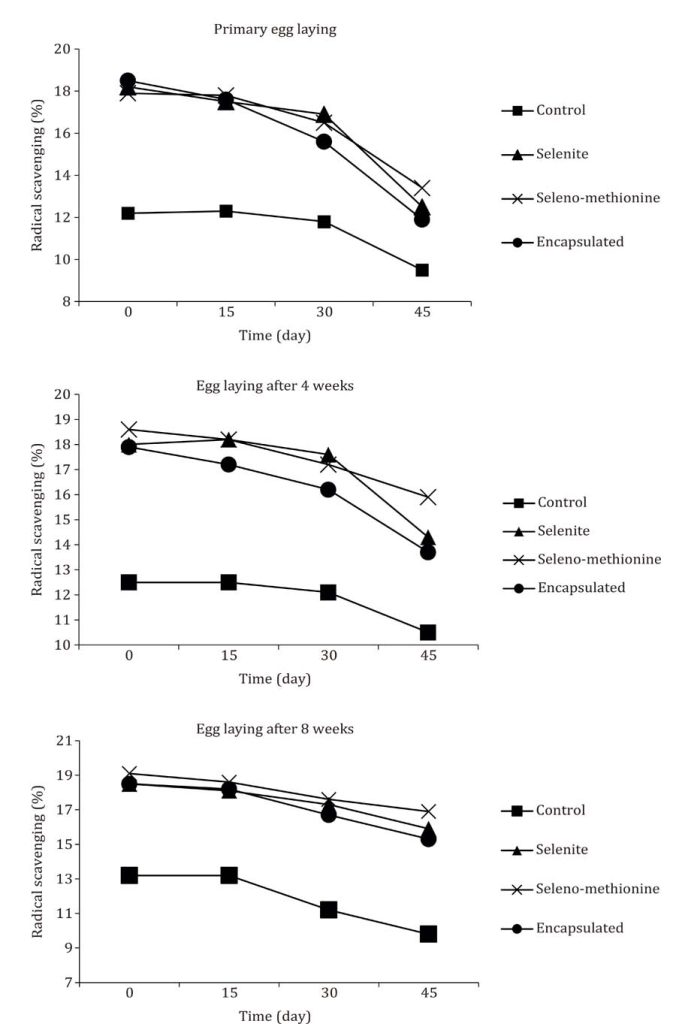
This study investigated the diet of laying hens containing selenium in organic, inorganic, and Se-Met complex encapsulated with chitosan was investigated in order to enrich eggs and their oxidative stability. The microencapsulation process was performed using two molecular weights of chitosan (150 and 250 kDa) and the ratio of chitosan to Se-Met (1:1.5 and 1:2) in order to achieve the best encapsulated selenium according to evaluation of particle size, zeta potential, and encapsulation efficiency. Subsequently, 450 Hy-Line W36 laying hens (80-week-old) were randomly assigned to nine dietary treatments with five replicates (10 birds per replicate) for a 12-week feeding trial. The results demonstrated that the most effective microencapsulation was achieved with 150-kDa chitosan at a 1:2 ratio, leading to optimal Se-Met stability and controlled release. Selenium accumulation was significantly higher in the egg yolk compared to albumen and shell, with the highest total selenium levels observed at week 12. Simulated digestion tests revealed that only 13% of encapsulated selenium was released in the gastric environment, whereas in the intestinal phase, the release rate increased rapidly, reaching approximately 40%. Additionally, eggs from hens fed with organic selenium exhibited the highest DPPH free radical inhibition, indicating superior antioxidant properties. Malondialdehyde levels were lowest in eggs from hens receiving organic selenium, demonstrating enhanced oxidative stability.
Keywords: egg enrichment; laying hens; microencapsulation; oxidative stability; selenium