R. Bras. Zootec.06/ago/2026;55:e20250090.
Sex and environment-biased maternal investment in cattle
Fabio Luiz Buranelo Toral
 , Eduardo Penteado Cardoso
, Daniel Resende Gonçalves
, Gabriela Canabrava Gouveia
, Mariana Mamedes de Moraes
, Rafael Monteiro dos Santos
, Virgínia Mara Pereira Ribeiro
, Eduardo Penteado Cardoso
, Daniel Resende Gonçalves
, Gabriela Canabrava Gouveia
, Mariana Mamedes de Moraes
, Rafael Monteiro dos Santos
, Virgínia Mara Pereira Ribeiro
ABSTRACT
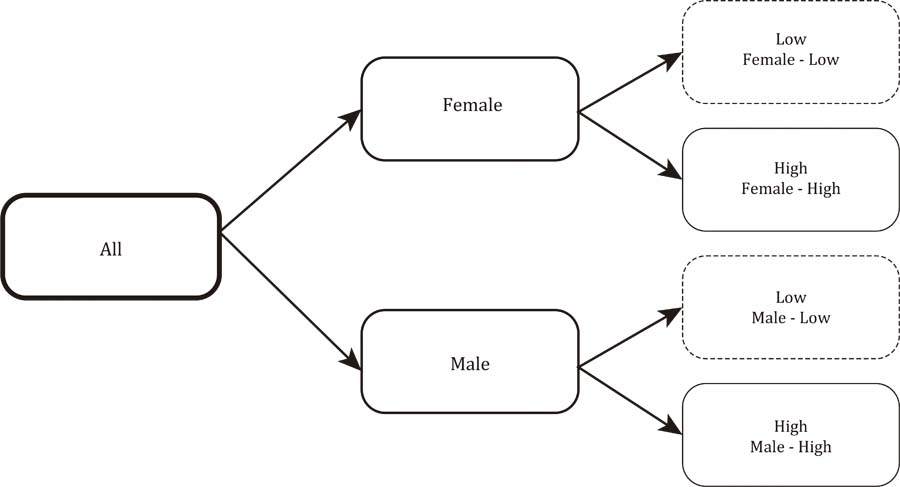
Mothers must allocate limited resources between raising their offspring and maintaining their own biological functions. In both wild and livestock populations, food availability fluctuates with climate, soil fertility, and rainfall, challenging mothers and calves when environmental quality declines. This study evaluated whether maternal investment is influenced by progeny sex and environmental conditions, using coefficients of variation as a measure of evolvability. We analyzed three pre-weaning growth traits in cattle: birth weight (BW), body weight at 120 days (BW120), and at 210 days (BW210). Environmental conditions were classified as low or high quality based on whether the cohort mean was below or above the overall mean. Environmental quality did not affect the maternal coefficient of variation for BW, but values for BW120 and BW210 were significantly higher in the low-quality environment, suggesting increased maternal investment under resource limitation. Additive genetic coefficients of variation for body weights were consistently higher in females than in males (BW: 6.74 vs. 5.98; BW120: 6.21 vs. 5.38; BW210: 6.07 vs. 4.90). In contrast, maternal effect coefficients were lower in females than in males from birth (3.21 vs. 3.92) to 120 days (5.52 vs. 6.09), but not at weaning (5.30 vs. 5.64). Overall, maternal investment in cattle appears sex-biased until 120 days and is modulated by environmental quality, with cows adjusting allocation to ensure stronger calves at weaning despite challenging conditions.
Palavras-chave: adaptation; calf; coefficient of variation; evolvability; offspring; weight