R. Bras. Zootec.13/maio/2026;55:e20240183.
Genetic diversity of the tilapia (Oreochromis spp.) in the Aguamilpa Reservoir, Nayarit, Mexico
Wally Karin Rubio-Gómez
 , Eduardo Sandoval-Castro
, Oscar Iram Zavala-Leal
, Francisco Javier Valdez-González
, Jasmin Granados-Amores
, José Alberto Rodríguez-Preciado
, Javier Marcial de Jesús Ruiz-Velazco
, Breidy Lizeth Cuevas-Rodríguez
, Eduardo Sandoval-Castro
, Oscar Iram Zavala-Leal
, Francisco Javier Valdez-González
, Jasmin Granados-Amores
, José Alberto Rodríguez-Preciado
, Javier Marcial de Jesús Ruiz-Velazco
, Breidy Lizeth Cuevas-Rodríguez
ABSTRACT
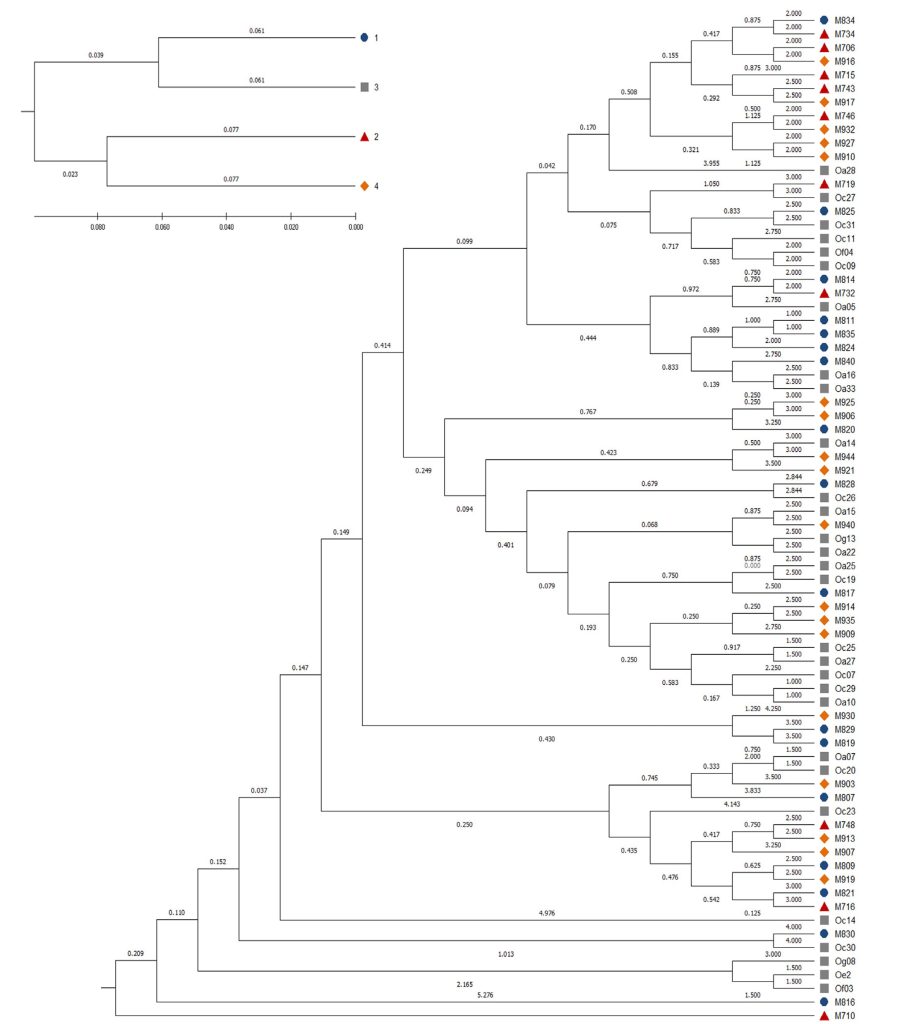
Tilapia is one of the most cultivated species in Mexico and an important fishery resource in the Aguamilpa Reservoir, contributing to the local food supply and economy. However, little is known about its genetic diversity and population structure in this reservoir. This study analyzed the genetic diversity of tilapia from the Aguamilpa Reservoir using SSR markers. According to morphological criteria, three species of the genus Oreochromis were identified, and 85 alleles were detected at five loci. The observed levels of heterozygosity and polymorphic information content (PIC) indicated high genetic variability, with 78% of the samples showing values greater than 0.5, which indicates substantial genetic variability. The fixation index (Fst = 0.028) and AMOVA showed low genetic differentiation among populations. Principal coordinates analysis (PCoA) and a dendrogram evidenced overlap among individuals, indicating the absence of a defined population structure and random exchange of alleles among populations. These results suggest that the reservoir’s tilapia populations function as a single, homogeneous genetic unit, providing valuable information for the sustainable management and conservation of this fishery resource.
Palavras-chave: genetic diversity; morphometric; reservoir; SSR markers; phytase