R. Bras. Zootec.30/Oct/2026;55:e20250029.
Dietary energy-density and digestible lysine formulation strategies for Japanese quails in the late laying phase under hot and humid tropical conditions
Ana Paula Silva Ton
 , Carolina Pereira Rodrigues
, Tatiane da Silva Fonseca
, Maicon Sbardella
, Anderson Corassa
, Ednaldo Antônio de Andrade
, Daiane de Oliveira Grieser
, Leonardo Willian de Freitas
ABSTRACT
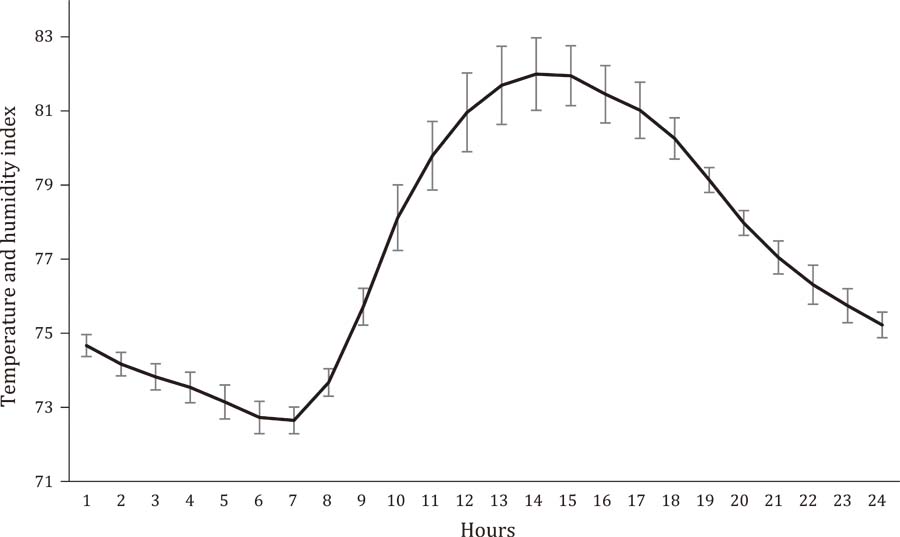
This study evaluated the laying performance, egg quality, and economic responses of Japanese quails in the late laying phase fed diets differing in energy density and digestible lysine levels under hot and humid tropical conditions. Six hundred 175-day-old laying Japanese quails were distributed in a completely randomized design with a 3 × 4 factorial arrangement, totaling 12 treatments with five replicates and 10 birds per experimental unit. Dietary treatments were formulated to contain three energy densities (2600, 2875, or 3150 kcal/kg metabolizable energy; ME) combined with four digestible lysine levels (0.90, 1.05, 1.20, or 1.35%; DLys). During the 112-day feeding period, birds had ad libitum access to feed and water and were kept at an average temperature of 27.00 ± 2.35 °C and a relative humidity of 81.70 ± 5.86%. No ME × DLys interaction was detected (P>0.05). Compared with the low-energy diet, diets formulated with 2875 or 3150 kcal/kg ME increased feed intake, DLys intake, egg production, and egg mass, and improved economic responses and feed conversion (P<0.05). The 3150 kcal/kg diet increased ME intake, body weight, and egg specific gravity (P<0.05). Increasing DLys levels linearly increased DLys intake (P<0.05), but did not improve productive performance, egg quality, or economic responses. Therefore, under a practical feed formulation approach, diets formulated with moderate or high energy density supported better productive and economic responses than the low-energy diet, whereas increasing DLys above 0.90% provided no additional benefits. These responses reflect the comprehensive outcome of dietary energy-density strategies driven by ingredient availability or feed-cost constraints, encompassing the physical and nutritional properties of fiber-rich or oil-rich feedstuffs.