R. Bras. Zootec.14/Apr/2026;55:e20250078.
Performance, intestinal development and cecal microbial composition in laying hens fed different fiber sources
Isadora de Menezes Meireles
 , Bruno Teixeira Antunes Costa
, Hitalo José Santos Barbosa
, Henrique Carneiro Lobato
, Itallo Conrado Sousa Araújo
, Leonardo José Camargos Lara
, Bruno Teixeira Antunes Costa
, Hitalo José Santos Barbosa
, Henrique Carneiro Lobato
, Itallo Conrado Sousa Araújo
, Leonardo José Camargos Lara
ABSTRACT
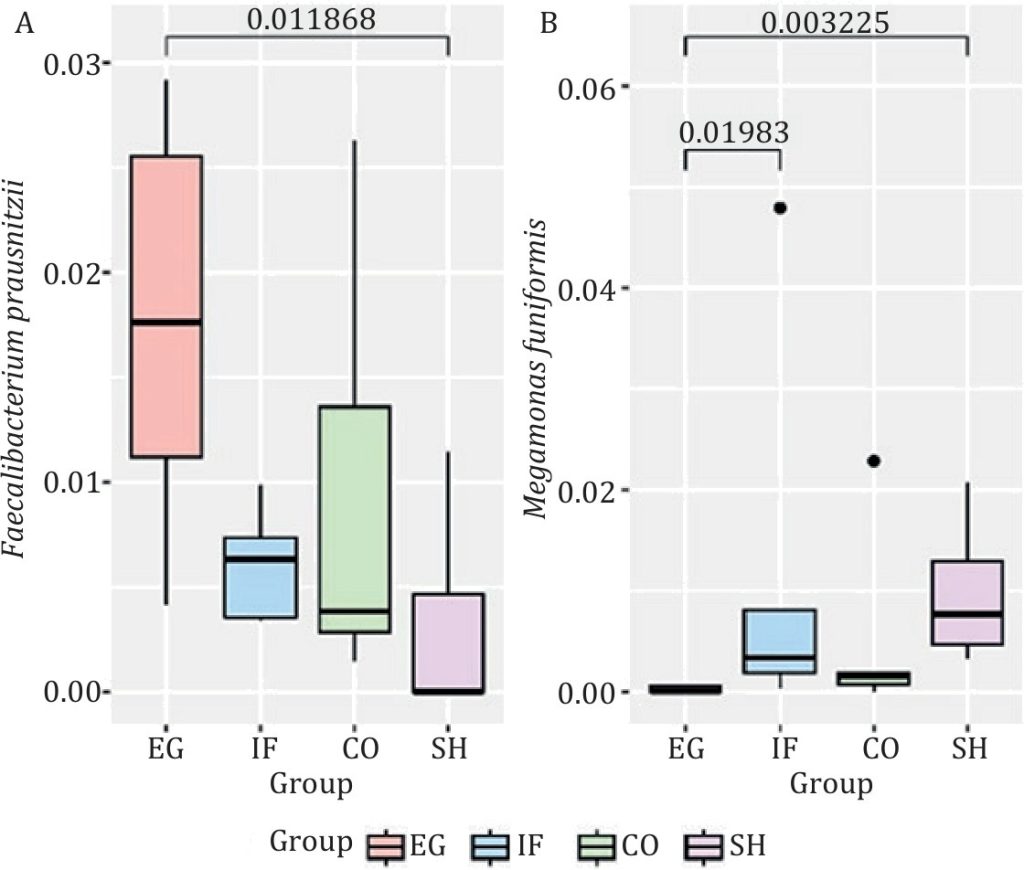
Laying hens’ gut health and microbiota are directly linked to their productivity, egg quality, and overall welfare. This study evaluated the impact of different fiber sources on the performance Dekalb laying hens (63 to 71 weeks of age) and egg quality at 67 and 71 weeks. At the end of the trial (71 weeks), organ development was assessed, and the cecal microbiota was characterized using 16S rRNA sequencing. Birds were divided into four groups: a diet with elephant grass (Pennisetum purpureum Schum), a diet with commercial insoluble fiber, a control diet without added fiber, and a diet with soybean hulls, with five replicates of 26 hens each. Fiber inclusion did not affect egg production, egg mass, feed conversion per dozen or per egg box, or eggshell quality (P>0.05). However, hens fed elephant grass had higher final body weight (P≤0.05), while soybean hulls improved feed conversion, reduced costs, and increased egg weight in the first evaluation (67 weeks; P≤0.05). Additionally, diets with soybean hulls led to a higher yolk percentage but a lower albumen percentage (P≤0.05). Beta diversity analysis revealed greater bacterial diversity in hens fed elephant grass compared with those in the control and soybean hull groups (P≤0.05). Soybean hulls increased the abundance of the Selenomonadaceae family, while elephant grass favored the genera Bacteroides, Megamonas, and the species Faecalibacterium prausnitzii. These findings indicate that elephant grass, soybean hulls, and commercial insoluble fiber are viable alternatives in layer hen diets to improve microbial diversity and gut health in poultry, with soybean hulls standing out as a cost-effective option for maintaining performance and egg quality.