R. Bras. Zootec.11/Oct/2019;48:e20180219.
Ingestive behavior and efficacy of male sheep housed in different stocking densities
Roberto Germano Costa
 , Neila Lidiany Ribeiro
, Priscila Torres Nobre
, Francisco Fernando Ramos de Carvalho
, Ariosvaldo Nunes de Medeiros
, Fabrício Ehm Martins
, Neila Lidiany Ribeiro
, Priscila Torres Nobre
, Francisco Fernando Ramos de Carvalho
, Ariosvaldo Nunes de Medeiros
, Fabrício Ehm Martins
ABSTRACT
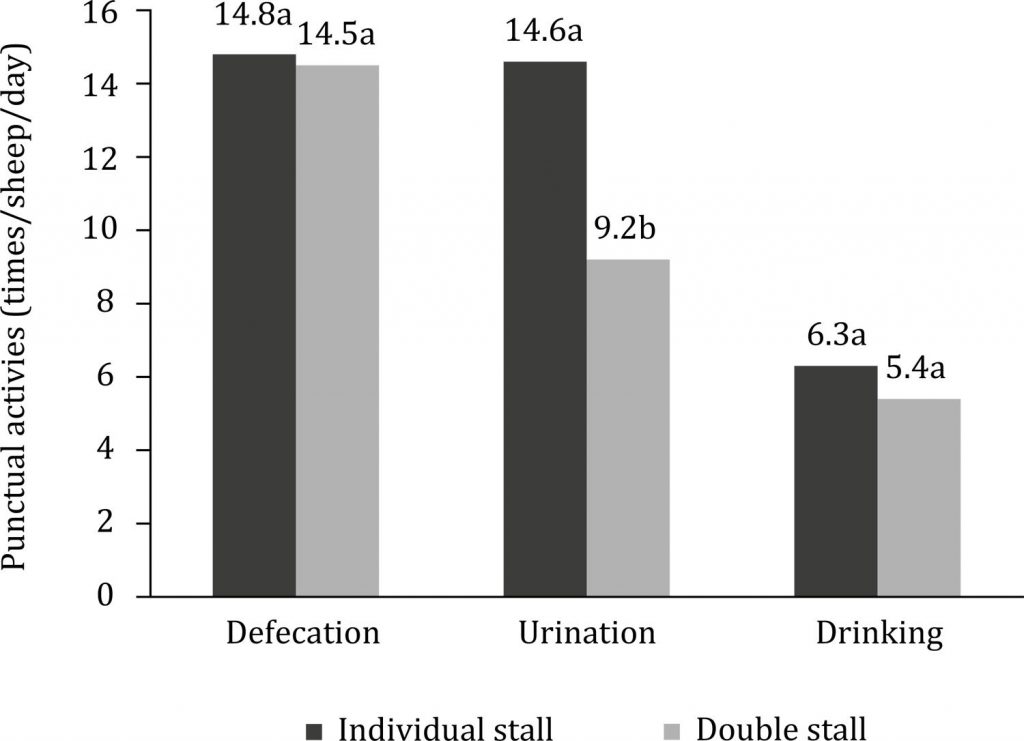
The objective of this study was to analyze the effect of housing density on ingestive behavior of male Santa Inês sheep housed individually and in double. Forty non-castrated males were used with an average initial weight of 21.33±2.62 kg and an average age of 120 days. The males were housed in two types of covered stalls: double stalls (two males/stall) of 3.0 m2 and individual stalls of 1.50 m2. Animals housed in individual stalls spent more time ruminating and less time eating than those in double stalls. These animals also spent more time in idleness. Sheep idled approximately 11.43 hours/day (47% of the time), which can be explained by the shorter time spent in rumination, considering that the diet used in this experiment had adequate nutritional quality. The animals in double stalls consumed more water, which resulted in increased urination. However, this activity did not interfere with total weight gain. Therefore, experiments testing stall density does not interfere with the performance of the animals.
Keywords: behavior; feeding; rumination; sheep