R. Bras. Zootec.12/May/2026;55:e20240194.
Exploring vitamin A supplementation in beef cattle: Implications for cow-calf systems
Pedro Henrique Borba Pereira
 , Marta Maria dos Santos
, Marcio de Souza Duarte
, Cláudia Batista Sampaio
, Marta Maria dos Santos
, Marcio de Souza Duarte
, Cláudia Batista Sampaio
ABSTRACT
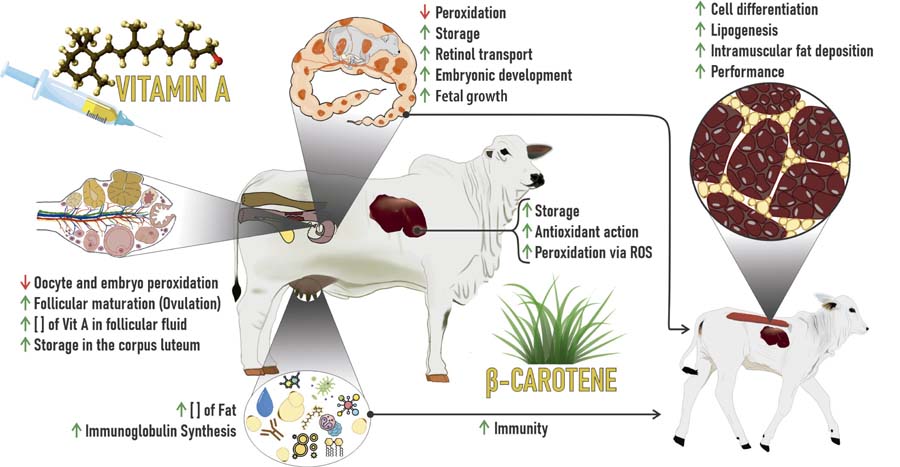
Vitamin A is listed in the fat-soluble vitamins group, whose absorption, transport, and storage are similar to the lipids. However, the vitamin A functions go beyond those reported in the ocular cells’ metabolism being also described in reproductive functions, growth, and specific tissue maintenance through gene regulation. In ruminants, vitamin A supplementation can be done in different ways. Orally with carotenoids which β-carotene is the main representative, and intramuscularly by injectable applications of synthetic vitamin A. In cows, it is common to perform oral supplementation with β-carotene in the middle and/or final third of gestation to increase plasma retinol concentrations, benefiting the fetus, colostrum synthesis, and reproductive indices. In newborn calves, vitamin A administrated intramuscularly might favor cell differentiation for lipogenesis increase in muscle tissue indicating a higher intramuscular fat degree and resulting in a future improvement in meat quality. Thus, this review aimed to address the vitamin A supplementation dynamic on the effect on gestational/maternal and neonatal metabolism in beef cattle.
Keywords: antioxidant; immunoglobulin; intramuscular fat; pregnancy; retinol