R. Bras. Zootec.29/Oct/2026;55:e20250040.
Sustainability of pasture species diversity in forage allowance-based stocking methods in subtropical grasslands of Northeast Argentina
Luis Gándara
 , Silvana Consuelo Ferrari Usandizaga
, Leonardo Atilio Riva de Neyra
, María Mercedes Pereira
, Osvaldo Balbuena
, Paulo César de Faccio Carvalho
ABSTRACT
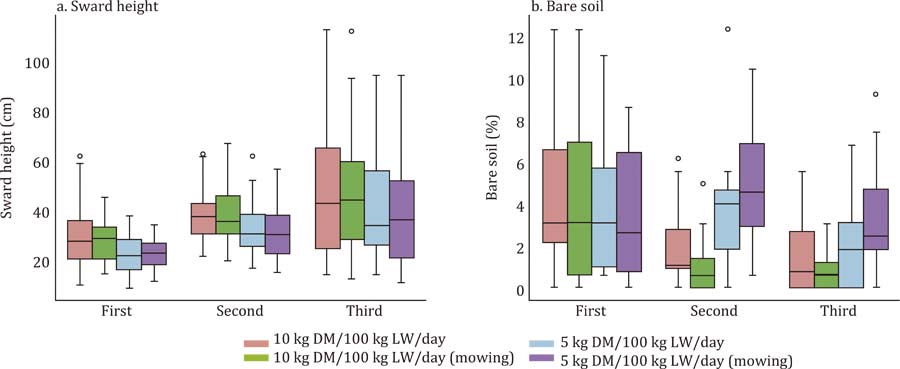
This study evaluated the effects of two forage allowance levels (5 and 10 kg DM/100 kg LW/day) and mowing on species diversity, botanical composition, and structural attributes in native subtropical grasslands of Northeast Argentina. Over three grazing cycles, all treatments maintained high species diversity (Shannon–Wiener ≈ 2; richness >30). Significant cycle effects were observed for species richness and evenness, which increased in the third cycle. Lower forage allowance favored short Poaceae and legumes, while higher allowance maintained taller swards and slightly higher evenness. Grassland growth, expressed as available forage biomass, showed similar patterns among treatments and increased from the first to the third cycle, indicating sustained biomass production across grazing intensities. Sward height increased across cycles in all treatments, reflecting structural changes in the pasture canopy. Bare soil decreased, particularly under higher allowance combined with mowing, indicating improved ground cover. These findings demonstrate that adaptive stocking based on forage allowance can maintain plant diversity while sustaining forage biomass production and promoting structural recovery of the pasture canopy and ground cover during the study period.
Keywords: diversity; livestock; native pasture; tropical pasture